
Bladder Cancer Treatment: Latest Advances and Breakthrough Options in 2026
Understanding Bladder Cancer
Bladder cancer starts in the bladder’s lining and is most common in older adults. The main type is non-muscle invasive bladder cancer (NMIBC), which stays in the surface layer. Muscle-invasive and metastatic types are more serious. Symptoms include blood in urine, pain when peeing, and frequent urination.
Risk factors are smoking, chemical exposure, and family history. Early detection improves outcomes. Standard tests include cystoscopy and urine analysis.
Current Standard Treatments for Bladder Cancer
For NMIBC, treatments start with surgery to remove tumors (TURBT). Then, BCG immunotherapy or chemo like mitomycin C is put in the bladder. For muscle-invasive cases, bladder removal (cystectomy) or chemo-radiation is common. Advanced cancer uses immunotherapy like pembrolizumab or targeted drugs.
Survival rates: NMIBC has 90% 5-year survival; advanced drops to 5-10%.
Emerging Treatments and 2026 Updates
In 2026, new options include TAR-200, which eliminated 82% of high-risk NMIBC tumors in trials. UC Davis PPM drug showed 75% remission after one dose. Enfortumab vedotin + pembrolizumab gives 65-70% response in metastatic cases, with 30% complete response.
Subcutaneous Keytruda for neoadjuvant use improves outcomes over surgery alone. AI models from Weill Cornell predict responses using imaging and genes, outperforming single tests.
Breakthrough Discoveries in Bladder Cancer Treatment
Recent findings reveal promising ways to fight bladder cancer using Alpha1H, a bladder-instilled medicine.
Rapid Urine Shedding as a Quick Test
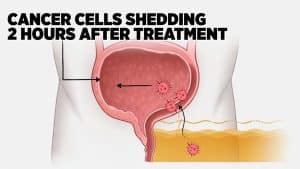
Alpha1H causes cancer cells to shed into urine within 2 hours. Doctors can count these cells to check if it’s working. High doses make more cells shed (statistical significance p=0.005–0.02). This could replace frequent camera checks.
Turning Off Cancer Genes and Boosting Local Immunity
Alpha1H turns off over 700 cancer genes, including RAS pathways. It also creates immune chemicals only in the bladder. This makes tumors look almost normal and helps the body fight locally without whole-body side effects.
Strong Mix with Low-Dose Chemo in Lab Tests
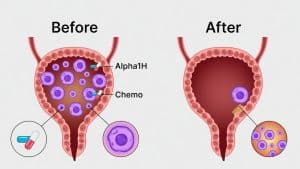
In mice, Alpha1H plus low epirubicin or mitomycin C eliminated all tumors for 12 weeks (p<0.001). Genes returned to healthy states. This could mean less chemo for humans.
Patent for the Best Drug Mix
A patent covers Alpha1H with epirubicin or mitomycin C until about 2040. It protects the idea, but tests in people haven’t started.
Immune Signals That Predict Success
IL-1RA and IFN-α2 rise in urine after treatment. Higher levels predict better results (IL-1RA OR >1, p<0.0001; IFN-α2 OR >15). IFN-α2 starts a cell-death chain (TRAIL → FADD → caspase-8). These could be simple urine tests to track progress.
Guideline Comparisons for Bladder Cancer Management
| Guideline | BCG-Unresponsive NMIBC | Low-Grade Ta Deintensification | Biomarker Use |
|---|---|---|---|
| EAU 2025 | Gemcitabine + docetaxel or clinical trials | Active surveillance option | Urinary markers for surveillance |
| AUA 2025 | Nadofaragene firadenovec or pembro | Surveillance for low-risk | FISH/cytology for high-risk |
| NCCN 2025 | Systemic pembro or intravesical chemo | Observation after TURBT | Biomarkers for risk stratification |
These show a shift to less invasive options for low-risk cases.
Patient-Centered Tools and Quality of Life
For neobladder vs. ileal conduit: Neobladders have 25% incontinence in men, 30% in women. Recovery: 3-6 months for neobladder, 2-4 for conduit. Tools: Use decision aids like those from Mayo Clinic. In Florida near West Palm Beach, try Palm Beach Gardens Medical Center or Cleveland Clinic Florida.
AI tools: Weill Cornell’s model predicts treatment response; ask your doctor about accessing similar systems.
Side Effect Management and Support
For BCG cystitis: Drink lots of water, take pain meds, use bladder relaxants. Gemcitabine gel has fewer side effects than liquid. Recurrence checks: Every 3 months for high-risk, 6-12 for low. Nutrition: Eat antioxidant-rich foods; exercise 30 min daily to build strength.
Future Outlook for Bladder Cancer Treatment
2026 brings more personalized options like AI predictions and new drugs. Breakthroughs like those with Alpha1H could make treatments easier and more effective if tested further.